morning light
2014
There’s a peculiar and beautiful phenomenon that occurs on the West Texas plains. Thanks to the region’s vast flatness, the first and last rays of sunlight each day skim across the surface of the earth at extraordinarily shallow angles. In these golden hour moments, shadows stretch toward infinity.
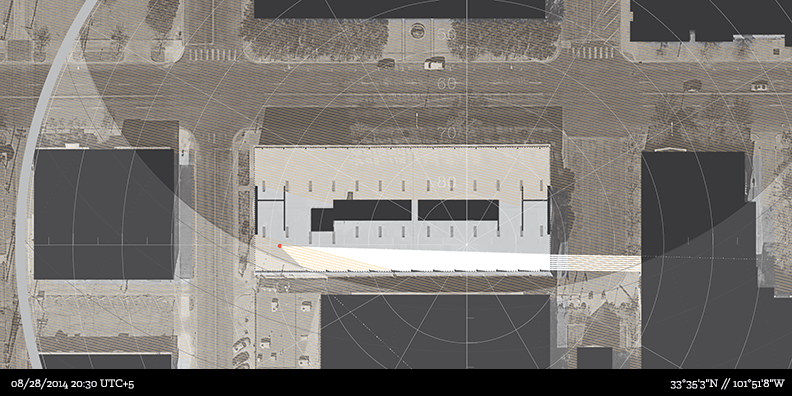
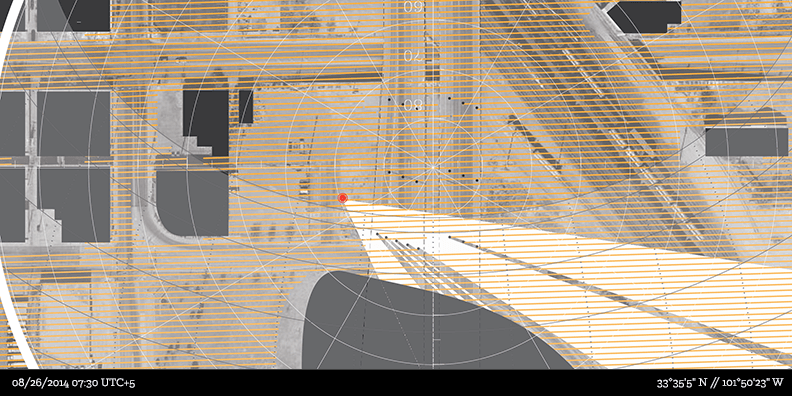
In the fall of 2015, I studied the behavior of this light. What started as a photographic exercise documenting how the morning sun moved through the built environment quickly evolved into a more layered investigation. I began diagramming the images, using color-coded fills to distinguish between direct sunlight, reflected light, and atmospheric illumination. From there, I mapped the exact location of each photograph, superimposing solar data over site orthophotography, creating a spatial and temporal record of each moment.
One site that fascinated me was the Broadway Avenue tunnel on the east side of Lubbock due to it’s unique condition in the otherwise planar cityscape where light was able to pass beneath the horizon plane. The tunnel offered an opportunity to document a moment when the underside of a surface — the ceiling of the underpass — was struck by early morning sun. It flipped the rules of light and shadow, creating a visual reversal that could only happen in that precise geometry, at that precise time.
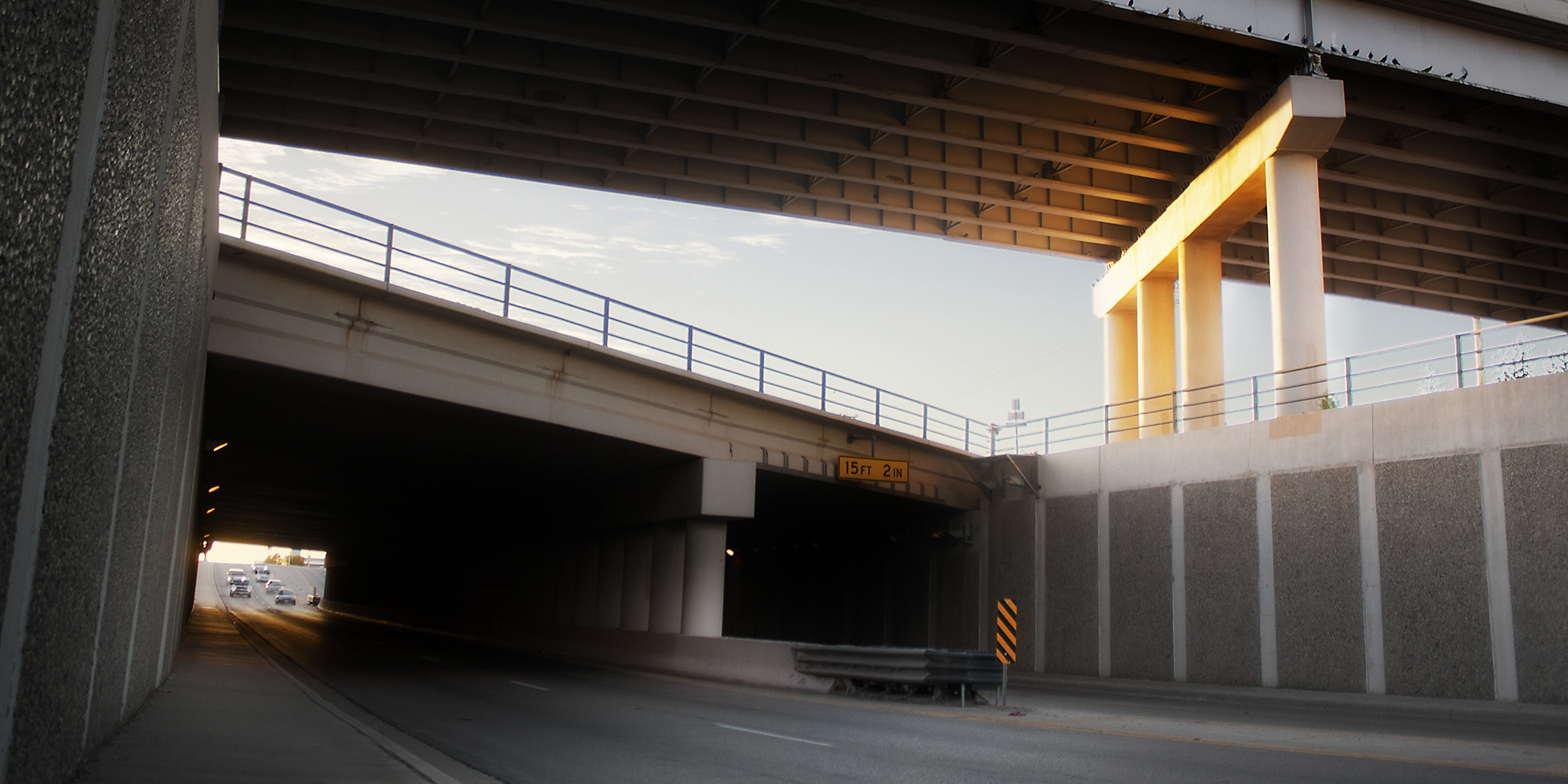
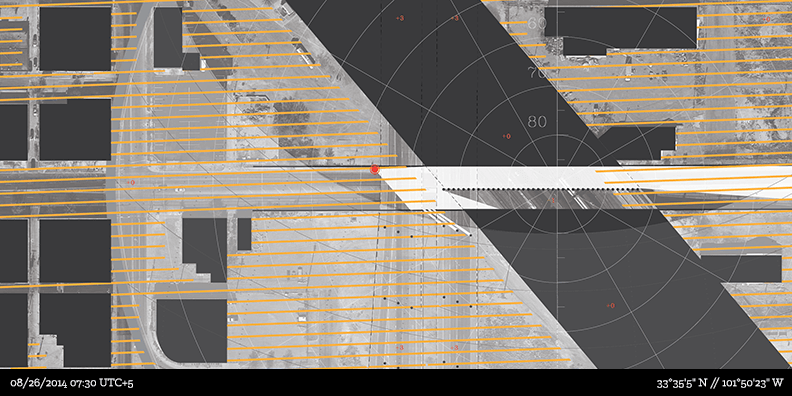
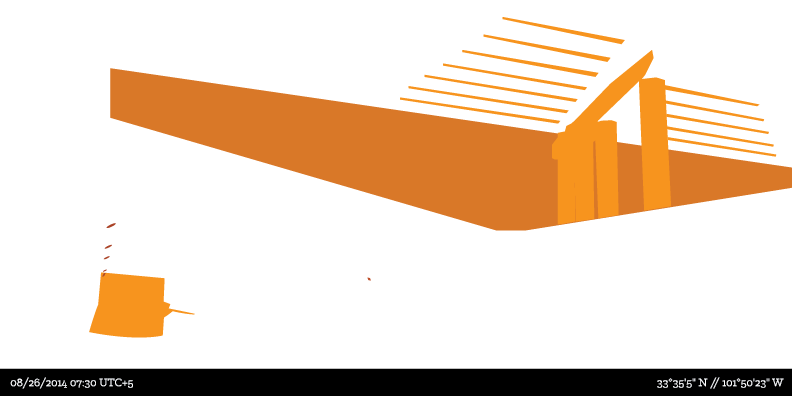
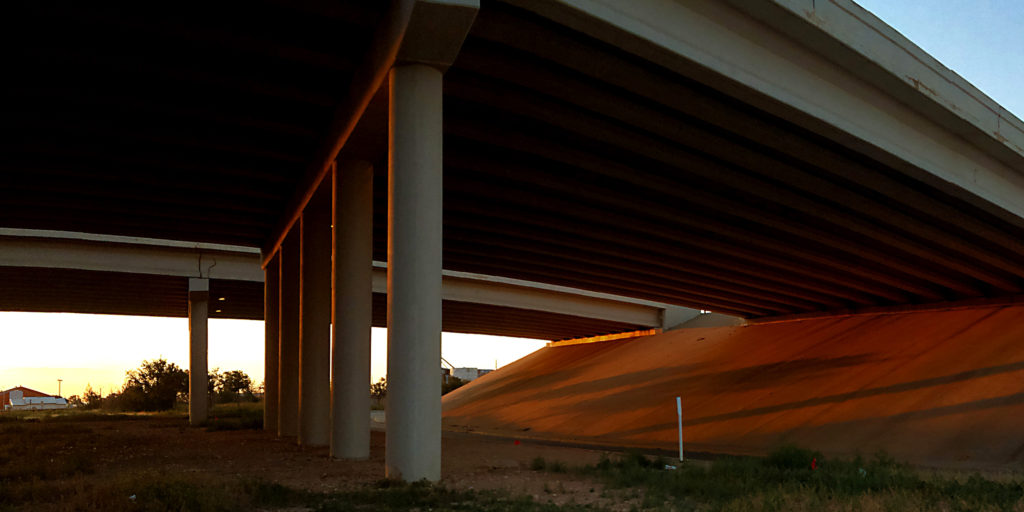
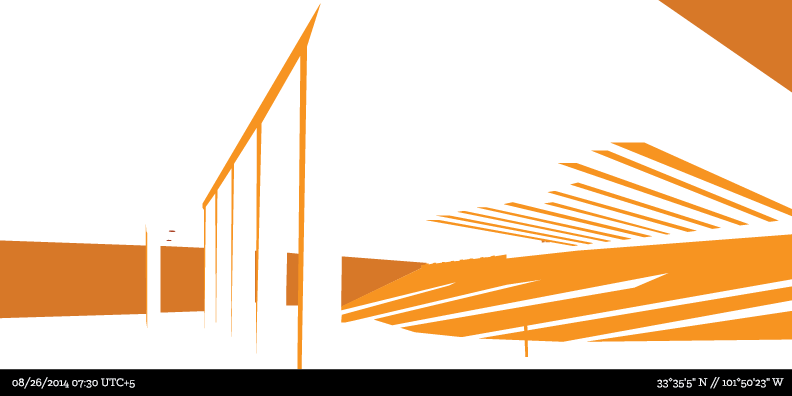
I found another such condition at a second underpass, where non-horizontal surfaces created moments of acceleration in the light’s journey. The geometry of these surfaces caused the light and shadow to seemingly traverse the surface quicker.
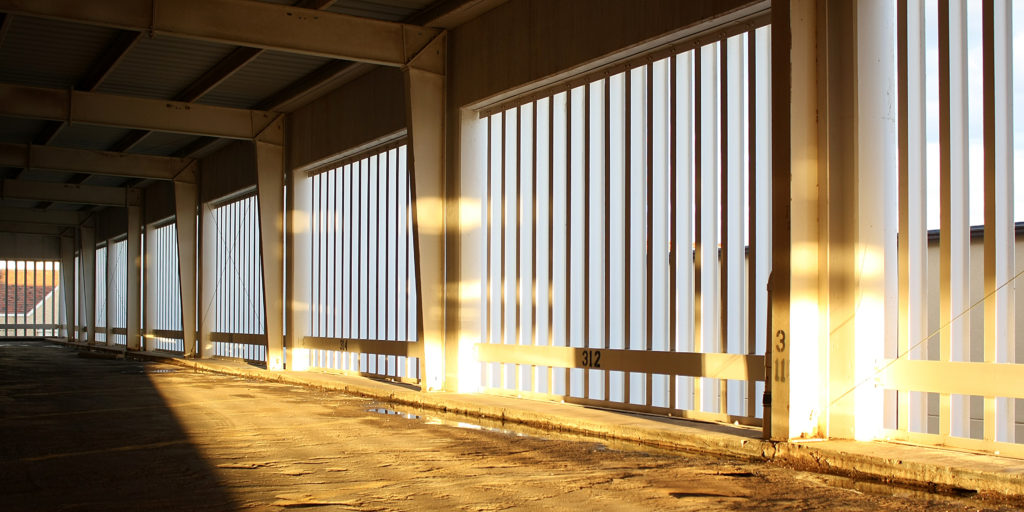
To round out the study, I wanted to document an interior condition and a contrasting moment of waning evening light. A local parking garage clad in vertical louvers became the final subject. When diagrammed, the repetitive structure of the louvers revealed an unexpected poly-rhythm of light and shadow.