time displacement
2012
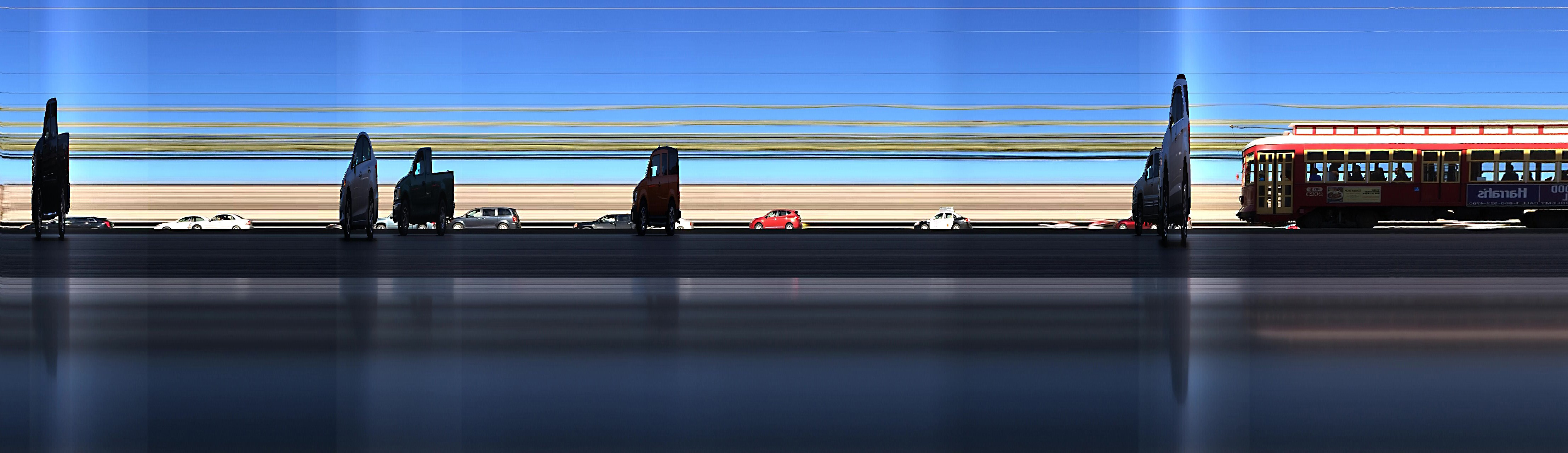
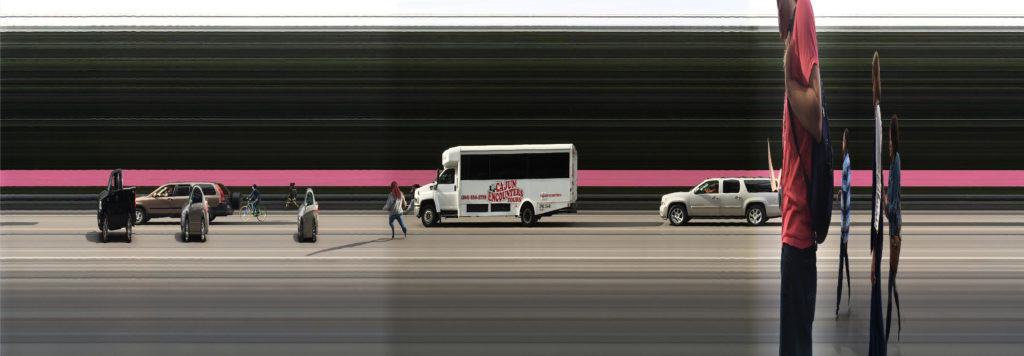
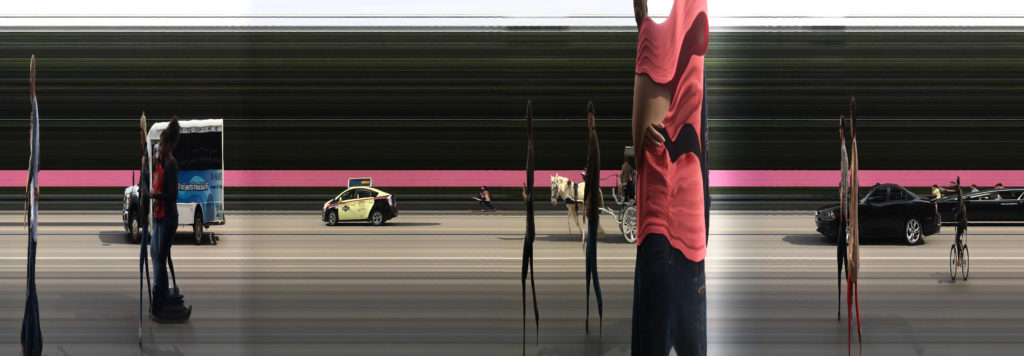
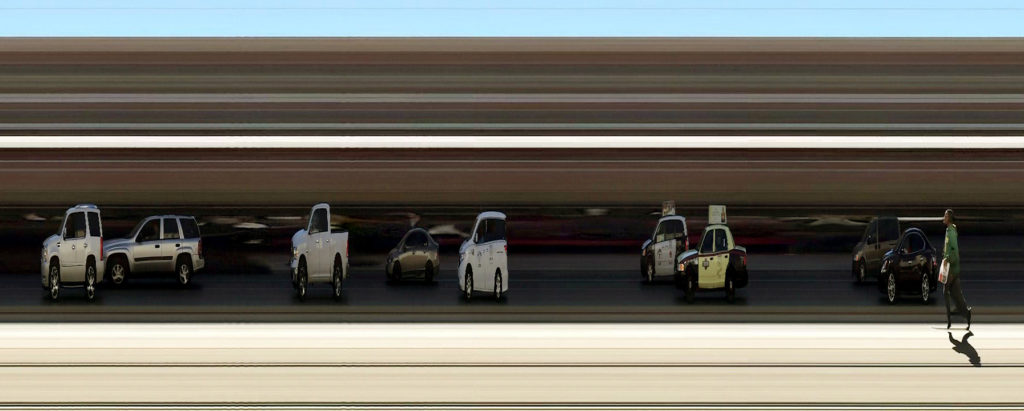
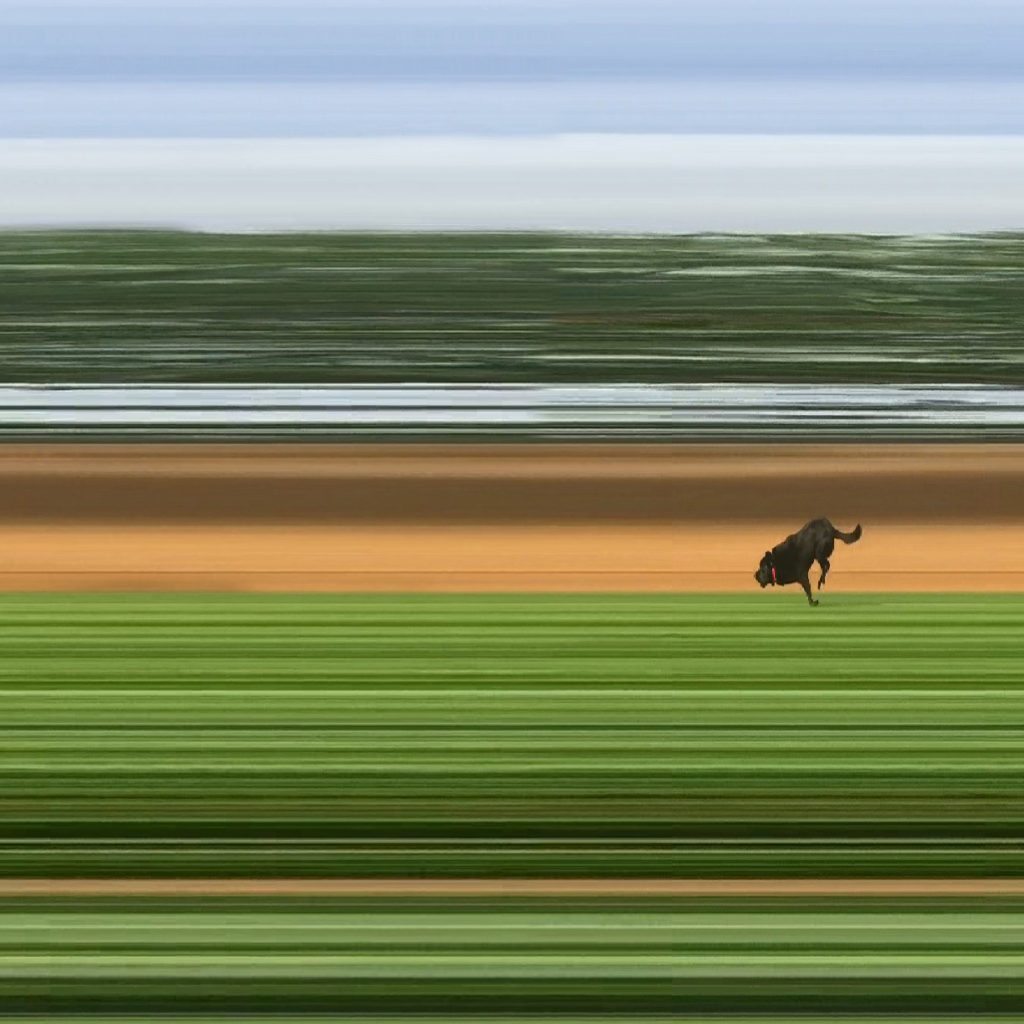
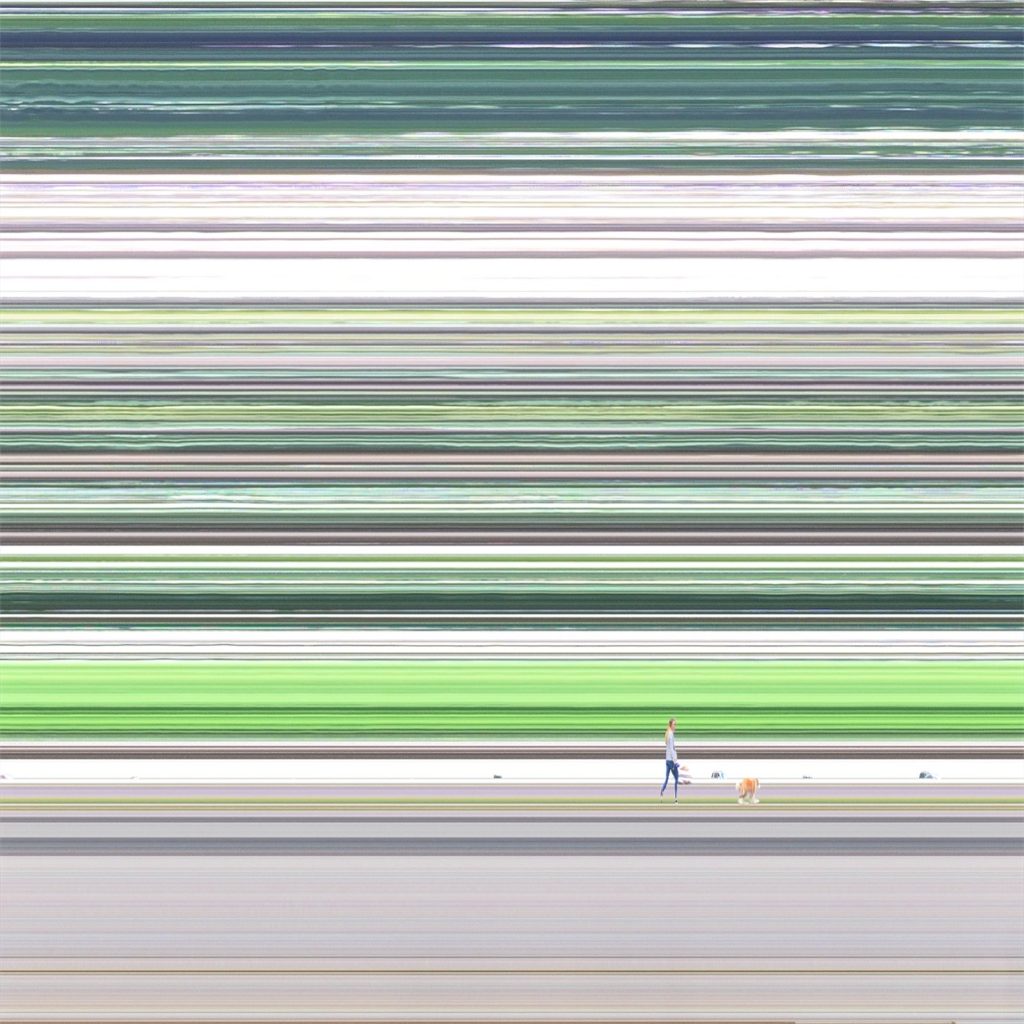
I began exploring slit-scan photography during a 2012 studio trip to New Orleans. I needed a way to catalogue the amount and frequency of traffic patterns throughout the city. I vaguely remembered a type of photography used for photo finishes in races and thought that might be a good vehicle for this visualization. I would later learn that this was called slit-scan photography. Unlike traditional photography, which records a single instant across a full frame, slit-scan imagery translates time into space. It doesn’t document a moment so much as it stretches it, producing an image that reads as a timeline rather than a snapshot.
In this process, the camera doesn’t capture full frames. Instead, it samples a narrow vertical (or horizontal) slit of pixels from each frame of a video (often the center-most column) and compiles them sequentially, one next to the next. The final image becomes a temporal landscape: read left to right, each slice reveals what passed by the camera at that point in time. Static objects become flattened bands of color; moving elements smear, stretch, or fracture depending on their speed and direction. The results are surreal.
The technique I originally devised was manual and labor-intensive. I recorded slow-motion footage using my iPhone, exported the video frame by frame, and extracted a single column of pixels from each, and then recompiled these pixel columns into slit scan images. The last part I wrote a bit of code to help expedite the process. As smartphone cameras and processors improved, others developed smartphone apps to automate the process, allowing for real-time slit-scan capture — but the hand-built nature of those early experiments remains a meaningful part of the work to me..
For an expanded exploration of this idea applied to live video, take a look at my related project: TIME IS CIRCULAR, which uses real-time input to fold moments in on themselves.